REVIEW · INVERNESS
3-Day Hebrides Tour from Inverness: Isles of Lewis and Harris
Book on Viator →Operated by Highland Experience Tours · Bookable on Viator
The Hebrides in three days sounds bold. This small-group trip strings together Lewis and Harris highlights with real-world stops along the Scottish route, from croft life to windswept edges of the UK.
I especially like the mix of ancient sites and lived-in culture: the traditional Blackhouse at Arnol and the big prehistoric moments at Callanish. It’s also the kind of schedule that gets you out early, but still leaves room to stand in the wind, look around, and take photos without feeling herded.
One consideration: meals and drinks are mainly on your own, and you’ll spend plenty of time outdoors in changeable weather—so plan for cold wind and a bit of cash for paid entries.
In This Review
- Key points worth knowing before you go
- Getting from Inverness into Hebrides mode (and why the drive matters)
- Day One: Ullapool to Stornoway and the Blackhouse at Arnol
- The guide factor: why good driving and good pacing change everything
- High-impact Lewis sites: Butt of Lewis, Callanish standing stones, and Carloway Broch
- Butt of Lewis Lighthouse: a short stop with a big mood
- Callanish Standing Stones: prehistoric scale, quick time window
- Carloway Broch: a rare kind of structure
- Isle of Harris: weaving culture and a real beach walk at Luskentyre
- Stornoway Harbour on Day Three: the ferry day and the return to Inverness
- Price and value: what you’re paying for (and what you’ll pay extra)
- Accommodation: 3-star B&B vs 3-star hotel (how to choose)
- How to pack and plan so the wind doesn’t ruin your photos
- Who should book this tour?
- Should you book the 3-Day Hebrides Tour from Inverness?
- FAQ
- How much does the 3-Day Hebrides Tour from Inverness cost?
- Where does the tour start, and what time does it begin?
- How long is the tour?
- What’s included in the price?
- Are meals like lunch and dinner included?
- What are admission tickets like at the stops?
- What’s the group size?
- Is Callanish Standing Stones accessible year-round?
- What luggage can I bring?
Key points worth knowing before you go
- Max 16 people keeps it more manageable and helps the guide work at your pace.
- 3-star B&B or hotel for 2 nights gives you a real base on the islands (instead of nonstop bus time).
- Blackhouse at Arnol is free and gives a strong sense of how Hebridean life worked on the land.
- Callanish + Carloway Broch are classic big hits for anyone who likes old stones and old building styles.
- Butt of Lewis Lighthouse is the wind-stop: short, remote, and perfect for seeing the UK’s rougher side.
- Harris culture and a beach walk pair hands-on craft time with time outdoors at Luskentyre Beach.
Getting from Inverness into Hebrides mode (and why the drive matters)
Starting in Inverness at 8:00am sets the tone. You’re not just sightseeing islands—you’re also moving through the Highlands, and that transition matters. The Outer Hebrides feel like another country once you’re out past the mainland’s rhythm, but you need that on-ramp.
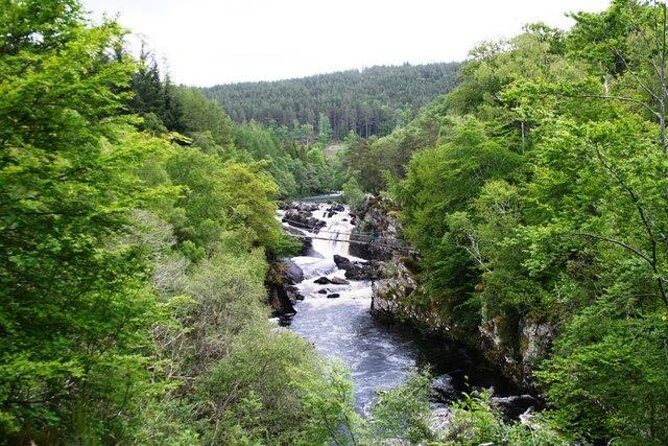
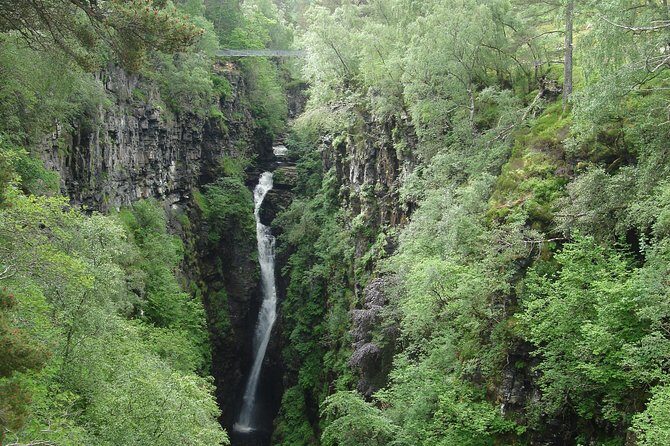
On the road, the tour builds in stops such as Rogie Falls and Corrieshalloch Gorge. These are short breaks that do two useful things: they break up the long day and they let you read the geography as you go. Even if your main goal is Lewis and Harris, those roadside viewpoints help you understand what kind of weather and terrain you’ll deal with later. You’ll also get a chance to reset your legs before ferry time.
A minivan pace also matters. This isn’t a huge bus tour, so you’re less likely to feel lost in a crowd. The tradeoff is you may have less flexibility to linger if you want to linger somewhere specific—so if you’re the type who takes 30 photos in one spot, build in your own habit of moving, then returning briefly if time allows.
Other Outer Hebrides tours from Inverness
Day One: Ullapool to Stornoway and the Blackhouse at Arnol
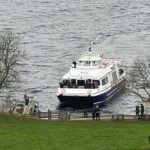
The first day’s big practical beat is the ferry. You arrive in Ullapool in time for the crossing to Stornoway. That ferry step is more than transportation. It’s one of the simplest ways to make the trip feel like an expedition instead of a day trip.
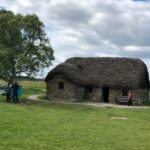
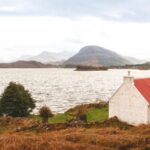
Once you’re on Lewis, the Blackhouse at Arnol is the standout stop for me. You’re looking at a traditional croft setting, and the focus is on how people lived—how they farmed, how they built, and why these homes made sense in a harsh climate. You get about 45 minutes here, and it’s labeled as admission free. That makes it one of the best value stops on the whole route.
What I like about this kind of start is the timing. It grounds you before you go full prehistoric. Callanish and brochs are easier to appreciate when you’ve first seen the everyday buildings and routines of the Hebrides. The Blackhouse also gives you a mental model: stone, weather, thrift, and practicality aren’t just scenery—they’re a way of life.
If you’re sensitive to wind, plan on feeling it right away. Even short stays outdoors can get chilly once you’re coastal. Layers help more than thick single jackets, because you can adjust when the sun comes out between clouds.
The guide factor: why good driving and good pacing change everything
This tour runs with a professional guide and a small group size (up to 16 people). That combination is a big deal on the Hebrides route, where roads are narrow, viewpoints are exposed, and timing is tight because of ferry connections.
From the names that have shown up in past groups—Fergie, Jane, and Dave—you can tell the provider tends to staff guides who can manage two things at once: content and coordination. In other words, you want someone who can explain what you’re looking at without treating you like a passenger in a history slideshow, and you want someone who can drive confidently on unfamiliar roads.
You’ll feel that most on the quick-hit stops. Each stop is fairly short (often 20–30 minutes). A great guide helps you use that time well: quick orientation, a clear sense of what matters, and practical reminders like how to maneuver on uneven ground.
And yes, a good driver can make the whole day less stressful. When you’re dealing with weather, timing, and ferry logistics, fewer jolts and fewer last-minute stops helps you stay calm and enjoy the scenery.
High-impact Lewis sites: Butt of Lewis, Callanish standing stones, and Carloway Broch
Day Two is where Lewis leans hard into its most famous sights. It’s a good plan if you want a “greatest hits” feel in three days, but it’s also worth understanding the pacing: these are stop-and-see moments, not long guided walks.
Butt of Lewis Lighthouse: a short stop with a big mood
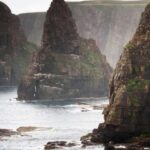
The Butt of Lewis Lighthouse is billed as the windiest place in the UK, and it’s a short visit (about 20 minutes). Admission isn’t included here, so if you want to go inside or pay for specific viewing, you’ll need extra budgeting.
Even without a lengthy visit, this stop hits psychologically. It’s remote, exposed, and weather-driven. You’re learning what the Hebrides actually feels like when the wind has nowhere to go.
A few more Inverness tours and experiences worth a look


Callanish Standing Stones: prehistoric scale, quick time window
Next is Callanish Standing Stones, around 30 minutes. These are possibly older than Stonehenge, and that comparison is useful because it tells you they’re not a small local curiosity—you’re dealing with a major prehistoric site.
Admission isn’t included, so again, plan on an extra cost. Also, there’s an important note for September 2024: Callanish will not be accessible due to facility closure. If you’re traveling then, you’ll need to confirm what alternative viewing (if any) is offered on your dates, because that closure could change your experience.
A practical tip: stand back and take your time reading the site from a distance first. Then get closer if you’re able. The stones make more sense when you see their layout rather than rushing straight to the first view.
Carloway Broch: a rare kind of structure
Carloway Broch is exceptionally well preserved and one of the better “wow, humans built this” moments on the route. You get about 20 minutes. Admission also isn’t included.
If Callanish is awe through scale, Carloway Broch is awe through design. Brochs are Iron Age structures, and the fact that this one is well preserved matters because it helps you picture how it might have looked and how it might have been used.
Because the stop is short, you’ll get the best return on your time if you focus on a few things: the shape, the condition of the structure, and how it fits into the wider coastal environment.
Isle of Harris: weaving culture and a real beach walk at Luskentyre
After Lewis’s prehistoric heavy hitters, Harris shifts the tone. It’s still Hebrides rugged, but the feeling moves toward craft, shoreline, and space.
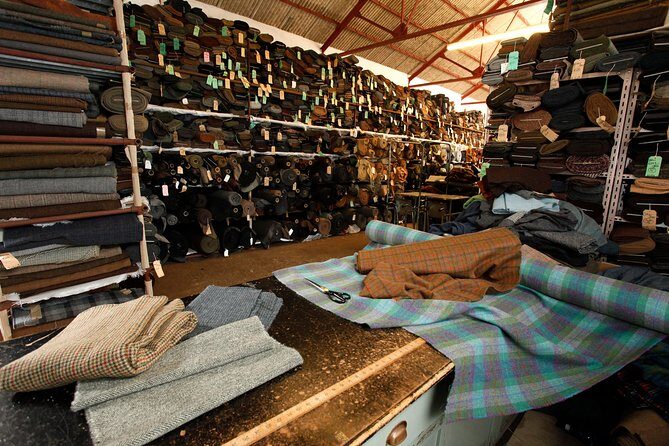
There’s a chance to watch a traditional Harris weaver at work. This is one of those stops that’s hard to replace with a museum photo. You’re seeing skill in action, and the tour lists the weaver as admission free, which makes it a high-value cultural pause.
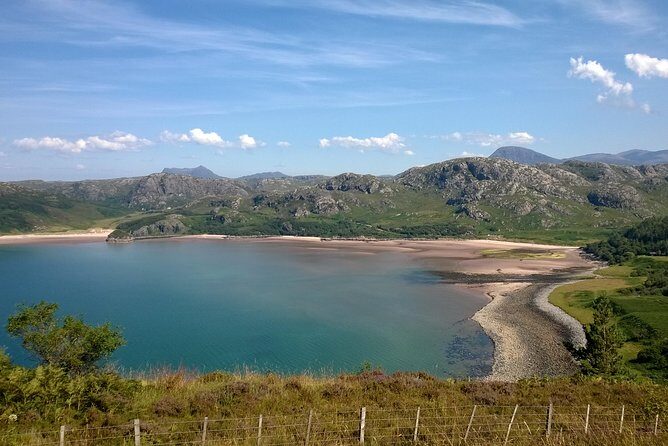
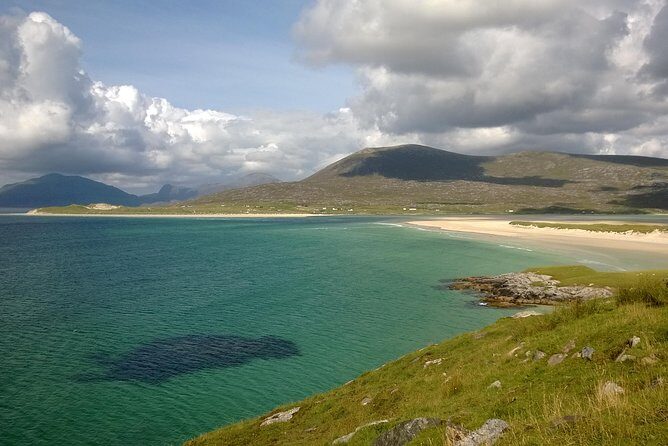
Then there’s time in Harris for scenery and a walk down Luskentyre Beach. Even without a lot of detail on how long that walk is, this is exactly the kind of stop that pays off when you’re traveling quickly. Beaches like this aren’t about checklists; they’re about walking, looking, and letting the weather set the mood.
A quick reality check: Luskentyre Beach can be windy and exposed, like most Hebrides coasts. Wear shoes you trust on uneven ground and bring a wind layer even if the day starts mild. Also, if you’re chasing the best photo light, you’ll likely want to build in your own patience—because cloud cover changes fast out there.
Stornoway Harbour on Day Three: the ferry day and the return to Inverness
On the last day, you’re back around the ferry rhythm. You go to Stornoway Harbour for the return trip to Inverness. This part is listed as about 3 hours and includes admission.
This is also where the tour makes sense from a fatigue standpoint. By now, you’ve seen enough stones, structures, and coastal viewpoints for the trip to feel complete. The harbor time gives you a final chance to watch the island life from the water’s edge before you head back to the mainland.
You arrive back in Inverness around 7:00pm. That end time is helpful because it keeps the experience from dragging into late-night chaos. Still, by the end of the day, you’ll likely be ready for a shower, a warm meal, and sleep—so keep your evening plans simple.
Price and value: what you’re paying for (and what you’ll pay extra)
At $699.57 per person for three days, you’re not buying a cheap taste of the Hebrides. You’re paying for four main things: a professional guide, transport by minivan, 2 nights of 3-star accommodation, and planned time at key sites plus the included ferry portion on the final day.
Here’s how I’d think about value:
- Accommodation included for two nights is a real cost saver versus trying to book Lewis and Harris hotels yourself on a tight schedule.
- A guided route matters on an island-hopping itinerary. The ferry timing and the quick stops are hard to replicate without careful planning.
- Small group size helps you stay oriented and keeps the day from feeling like a stampede.
What you should expect to pay extra for: food and drink unless specified, and several of the major stops list admission as not included (Callanish, Carloway Broch, and the Butt of Lewis Lighthouse). So part of the true cost is what you spend on entries and meals during the day.
Also note the luggage limit: maximum 15kg per person, plus size limits of 55cm x 40cm x 20cm, with a small carry on. On short-site tours, you’ll likely want to pack light so you can move comfortably and not fight your bag on ferry steps and at wind-exposed viewpoints.
Accommodation: 3-star B&B vs 3-star hotel (how to choose)
Your overnight stay is in your choice of 3-star bed and breakfast or 3-star hotel for two nights. That’s a good flexibility point because it lets you match your style.
A B&B tends to feel more personal, but the tradeoff can be different room layouts and sometimes fewer hotel-style conveniences. A 3-star hotel can be more consistent from room to room and often makes it easier to grab what you need quickly.
Either way, breakfasts are included twice. You’ll want to take breakfast seriously on a day like this. The mornings start early, and you’re going to burn energy standing outside in wind, climbing onto viewpoints, and pacing yourself through multiple short stops.
When picking between B&B and hotel, think about what helps you wake up: quiet and homey, or straightforward and predictable.
How to pack and plan so the wind doesn’t ruin your photos
This is one of those trips where clothing affects your enjoyment as much as sites do.
Bring:
- A windproof layer (not just a hoodie).
- Comfortable shoes for uneven ground and coastal paths.
- A small day bag for essentials so you’re not wrestling your main suitcase at stops.
- A reusable bottle for water (then buy extra drinks if you want, since meals aren’t included).
Keep in mind: you’ll spend time outdoors at multiple sites, including exposed lighthouse and beach areas. Even on bright days, coastal wind can turn a pleasant walk into a cold sprint back to warmth.
Also, plan your mindset for short stops. You won’t have hours at every site. The trick is to pick what you want from each moment: a quick overview, a few photos, and a short walk to the best angle—then move on.
Who should book this tour?
This fits best if you:
- Want a three-day, guided Lewis-and-Harris loop without having to piece together ferries and transport.
- Like a balance of prehistoric sites and everyday Hebridean life.
- Prefer small-group pacing over long, unstructured days.
- Want an experienced guide running the logistics and interpretation—especially important when access rules change, like the September 2024 Callanish closure notice.
It may feel less ideal if you:
- Want long stays at a single site. This itinerary is built around multiple highlights, so time is shared.
- Don’t like planning for extra entry fees and meal spending, since several key stops are not included for admission.
Should you book the 3-Day Hebrides Tour from Inverness?
If your goal is to see Lewis and Harris in a structured, guided way with strong cultural context, I’d say this is a solid booking. The route hits major prehistoric landmarks (Callanish and Carloway Broch), adds a meaningful living-history moment (Arnol Blackhouse), and still makes room for Harris craft and a beach walk.
Book it if you’re okay with short stops and you plan for meals and a few paid admissions. Skip it or rethink if you’re traveling in September 2024 and Callanish access is a dealbreaker for your trip, because that closure could affect your experience.
In short: this is a practical way to get Hebrides variety fast—without turning your days into DIY logistics.
FAQ
How much does the 3-Day Hebrides Tour from Inverness cost?
The price is $699.57 per person.
Where does the tour start, and what time does it begin?
It starts at 25 Union St, Inverness IV1 1QA, UK, at 8:00am.
How long is the tour?
It runs for 3 days, with a return to Inverness around 7pm on the last day.
What’s included in the price?
Included items are a professional guide, transport by minivan, 2 nights accommodation, and breakfast (2). Ferry time connected to Stornoway Harbour is also included on the return day segment.
Are meals like lunch and dinner included?
Food and drinks are not included unless specified.
What are admission tickets like at the stops?
Some stops list admission as free (for example, the Blackhouse at Arnol and the Harris weaver moment). Other stops list admission as not included (for example, Butt of Lewis Lighthouse, Callanish Standing Stones, and Carloway Broch).
What’s the group size?
The tour has a maximum of 16 travelers.
Is Callanish Standing Stones accessible year-round?
No—Calanais Standing Stones will not be accessible in September 2024 due to facility closure.
What luggage can I bring?
Each person can bring up to 15kg, with maximum size 55cm x 40cm x 20cm plus a small carry on.