REVIEW · INVERNESS
Inverness and Outlander Private Self-Guided Walking Tour
Book on Viator →Operated by Pandemic Tours · Bookable on Viator
Outlander vibes meet real Inverness streets. I like the audio guide by Alex and I like the self-paced walking format that lets you linger when something catches your eye. It’s a smart way to mix Inverness landmarks with the Outlander connections you’ll actually remember on your next Highlands drive.
You start in the center, near Market Brae, and you’ll move past big civic buildings, churches, bridges, and historic old-town corners. The app route uses GPS directions, plus maps and visual extras, so you can keep walking instead of playing guess-the-street.
One thing to think about: this is an audio-first, self-guided experience, so you won’t get a live expert to answer your questions on the spot. If you’re expecting every stop to be heavy-duty Outlander lore, you may find the balance leans toward Inverness history and setting.
In This Review
- Key things I’d highlight before you go
- Starting on Market Brae: getting your bearings fast
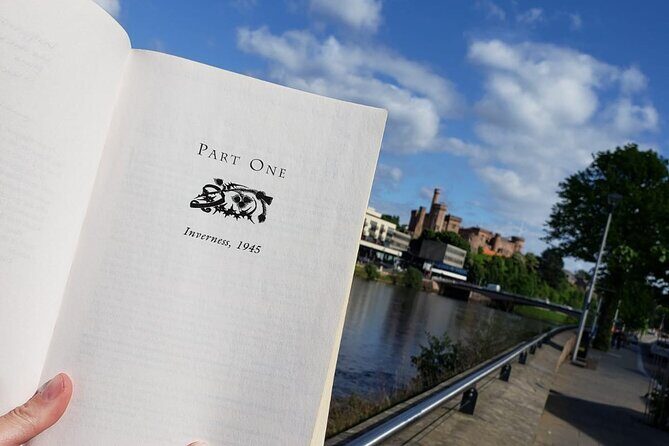
- Where the story meets the city: Inverness Castle and the 1945 thread
- Churches and civic buildings you’ll actually recognize later
- Faith, art, theatre, and everyday Inverness stops
- The River Ness via Greig Street Bridge: spring timing matters
- Leakey’s Bookshop and the old-church-to-library vibe
- WWII healer vibes at North Church Place
- Abertarff House and the Victorian Market: history you can step through
- Falcon Square to Eastgate: the city keeps going
- Price and value: what $12.22 buys you in real terms
- Practical tips that make the walk smoother
- Who should book this Inverness and Outlander walk
- Should you book this self-guided tour?
- FAQ
- How long is the Inverness and Outlander private self-guided walking tour?
- Do I need an in-person guide?
- What language is the tour available in?
- Where do I start the tour?
- What’s included with the self-guided experience?
- Are admissions required at the stops?
- Is this tour private?
- Are service animals allowed?
Key things I’d highlight before you go
- Alex’s human audio: no computer voice, just a guide talking you through the route
- Three weeks of access: you can revisit the walk (or restart it) without rebooking
- GPS + maps built in: you’re not stuck trying to match vague directions
- Outlander links at real places: from WWII-era story beats to notable Inverness sites
- All stops are ticket-free: you’re walking and looking, not buying museum admissions
Starting on Market Brae: getting your bearings fast
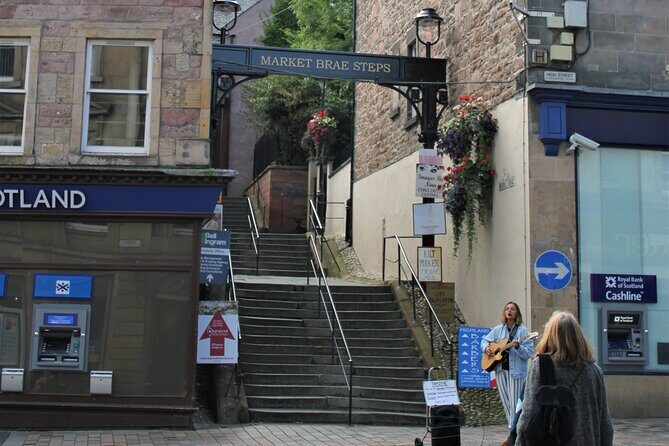
Your walk begins at Market Brae Steps, right in central Inverness. This is a good launch point because you’re already in the action—Inverness is the Highlands’ main base, and you get the sense of a working city rather than a theme park.
The route is designed for the “pause and look” style of sightseeing. You move stop to stop without anyone herding you along, and you can control how long you spend outside each building. That matters in Inverness, because weather can turn quickly, and you’ll want to duck into shelter when you need to.
A nice bonus here is the storytelling grounding. Even the early scenes are practical: you learn what you’re looking at in front of you—like the tourist info presence that fits the Outlander timeline when Frank and Claire return to Inverness in 1945.
Other Outlander filming-location tours we've reviewed in Inverness



Where the story meets the city: Inverness Castle and the 1945 thread
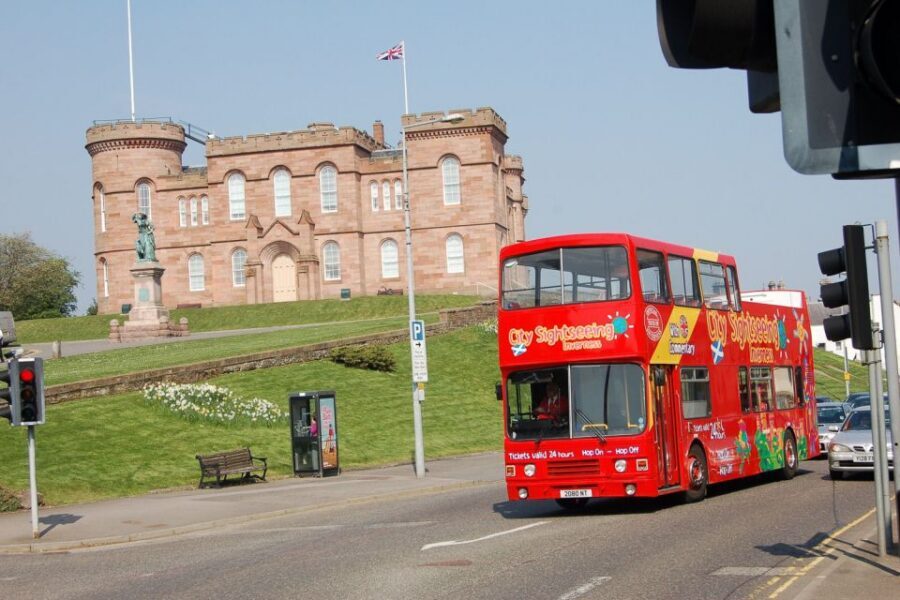
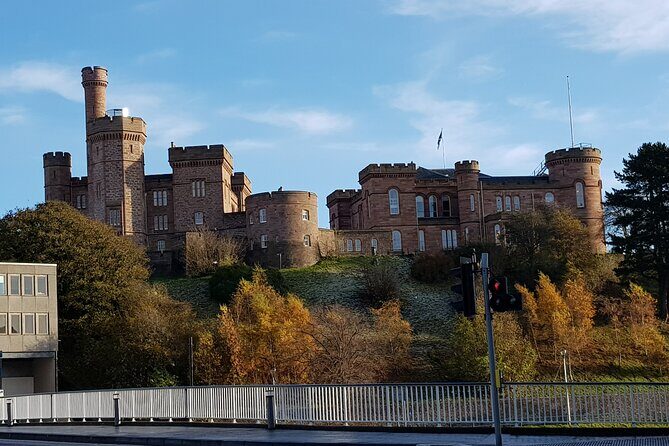
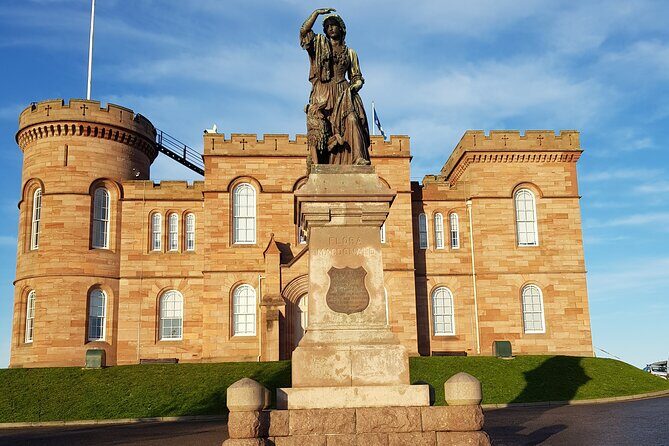
A big early highlight is Inverness Castle. The connection is more than a name-drop, because the guide ties it to how Malcolm III of Scotland shaped the area after destroying an older castle about a kilometer to the north-east. Then it pivots to how the site connects to the Outlander novels and the TV series.
That’s the sweet spot of this tour: you’re not only learning what Inverness looks like now, you’re getting a sense of why these places matter across centuries. It’s also a helpful mindset for Outlander fans, because the show’s mood often comes from locations with long timelines.
Just as important, the tour places story context into real street reality. It points you toward a former tourist information setup you might not notice on your own, and it frames it around the post-war reunion idea from Outlander. It’s small, but it makes your walk feel stitched together rather than randomly spaced trivia.
Churches and civic buildings you’ll actually recognize later
If you want a walk that helps you orient before you drive deeper into the Highlands, this section does the job.
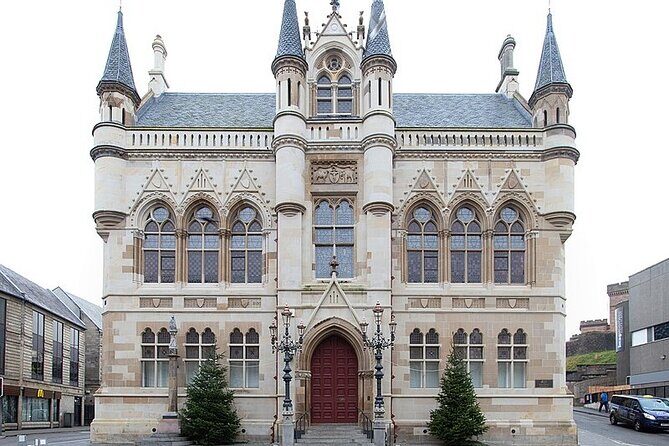
You’ll pass Inverness Town House (built in 1878 on the old marketplace, opened in 1882 by Queen Victoria’s second son, Alfred). It’s one of those landmarks that looks important because it has always been important. Knowing that date range helps you “read” the architecture instead of just taking a photo.
Then you’ll move through the religious architecture sweep:
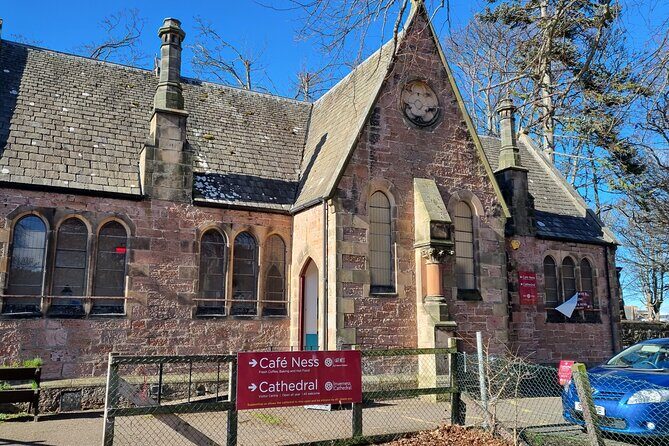
- Inverness Cathedral, dedicated to St Andrew, with its foundation stone laid on 17 October 1866 by the Archbishop of Canterbury, after Bishop Eden proposed a cathedral back in 1853.
- St. Mary’s Roman Catholic Church, designed by William Robertson and opened 2 April 1837, a fine example of Victorian Gothic Revival.
- Old High St Stephen’s Church, where the tower dates to the fourteenth century, plus the nearby St Michael’s Mount and a link to Irish tradition.
This is one of the tour’s strongest benefits for non-bookish travelers too. Even if you’re only lightly into Outlander, you’ll come away able to name major buildings and understand their rough ages. That makes Inverness feel less like a blur when you return.
Faith, art, theatre, and everyday Inverness stops
Not every stop has to be dramatic to be useful. A few points on this route quietly add texture.
You’ll see The Three Virtues statue—Faith, Hope, and Charity. It’s only indirectly tied to Outlander, but the guide connects the idea back to the apostle Paul and his first letter to the Corinthians. This is the kind of cross-reference that works best if you like catching smaller themes rather than chasing one huge storyline.
Next up is Eden Court Theatre. The building is modern compared to the churches, but it’s still part of Inverness identity, originally opened 15 April 1976. If you’re in town on a night with shows or performances, it helps to know what’s here and where it is.
And then you’ll hit the more everyday retail-cultural moment at Highland House of Fraser. The point isn’t shopping for its own sake—it’s noticing how traditional highland dress shows up right in the city’s storefront windows. Even a quick glance helps you feel like you’re in the real Highlands, not just passing through.
The River Ness via Greig Street Bridge: spring timing matters
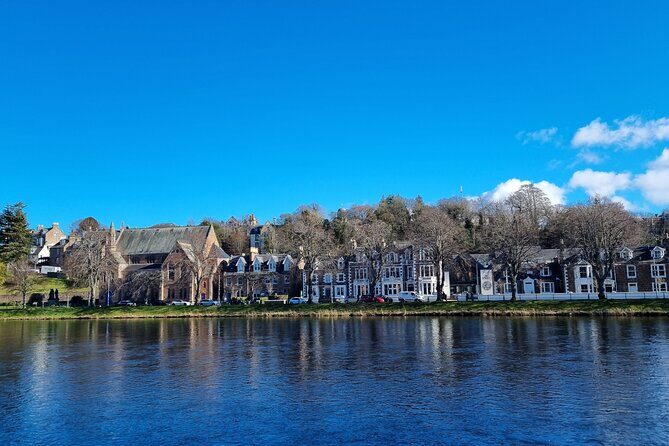
Greig Street Bridge is a pedestrian bridge, and the guide uses it to talk about the River Ness rhythm. In spring, water levels rise because of rain and melting snow flowing into the glen (a Scottish term for a valley). That seasonal note is practical, because it affects what you’ll actually see.
If you’re walking when the water is high, the bridge feels more than a crossing. It becomes a viewpoint into the city’s underlying geography. Inverness sits where waterways and valleys shape daily life, so a quick bridge stop like this can make the whole walk feel more grounded.
Also, bridge stops are a good way to break up a sightseeing loop. You get movement, a little scenery, and a mental reset before the next church or old-town corner.
Other Inverness city walking tours we've reviewed
Leakey’s Bookshop and the old-church-to-library vibe
Few things feel more Inverness than a bookshop that used to be something else.
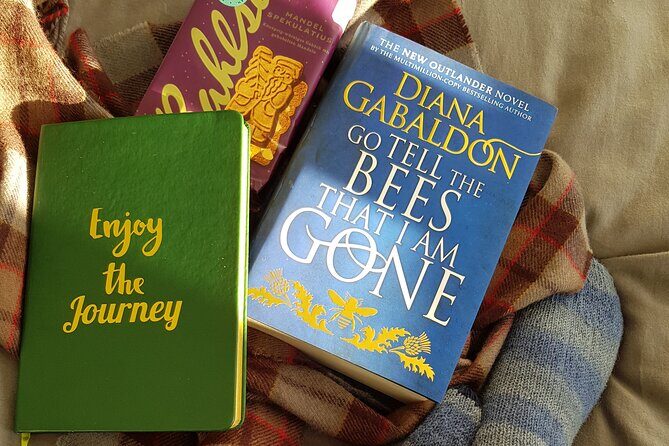
Leakey’s Bookshop is housed in a converted old church, and it’s set up as a second-hand shop with rare and old prints, classic volumes, old maps, and more. The Outlander tie is fun: you might find a signed edition of one of the Outlander novels here, though you can’t plan your day around that.
What I like about stops like this is that they reward curiosity. Even if you only spend five minutes inside, you’ll still get something memorable—either a map you didn’t expect, or a print that makes you picture the region differently.
This is also where I’d shift into fan mode. If you are an Outlander reader, you’ll probably spot the connection without needing the audio to do the heavy lifting. And if you’re not, it’s still a strong little diversion that feels local.
WWII healer vibes at North Church Place
One of the most specific story beats lands at North Church Place. The tour frames it through Claire’s role as a WWII combat nurse and healer in Outlander, including the moment Jamie first falls for her when Claire sets his shoulder in the first book and the TV show.
Then the guide makes it grounded in the place you’re standing in. It points out that if Claire lived in Inverness in the eighteenth century, she would likely have worked as a healer in the building opposite. That’s a smart storytelling move because it stops the narrative from feeling abstract.
Even if you’re not chasing every detail, this kind of stop gives you a mental image. You remember not just where Claire is in the story, but how the city’s real locations could have fit that kind of life.
Abertarff House and the Victorian Market: history you can step through
Abertarff House is one of those Inverness buildings that sounds like a time capsule. It’s described as the oldest non-secular building in Inverness, a 2.5 story merchant house built for the Fraser of Lovat family in 1593. It’s also served many different purposes since then.
That “many purposes” idea is useful. Buildings survive because they can adapt, and you get a sense of that here. Even a quick glance at Abertarff House helps you understand why Inverness keeps its old bones while still functioning as a modern city.
Then comes the Victorian Market. Even when a stop doesn’t have a major Outlander mention, covered markets matter. The guide treats it as something you can’t miss in Inverness, and in practice, it’s the kind of place where the city’s working life shows up fast—produce, trade, and everyday movement under a roof.
Falcon Square to Eastgate: the city keeps going
The final stretch ends around Falcon Square, dedicated to John Falconer, who founded Falcon Foundry in 1858. The square includes falcons flying around a unicorn statue, which makes the whole area a little quirky in the best way.
From there, the route nods toward Eastgate Shopping Centre, opened in 1983 and extended in 2003, with over 60 stores inside. This is not a deep history stop. It’s a reminder that Inverness isn’t frozen in time—it layers the old with what people need today.
When you finish back near Market Brae, you’ll feel like you’ve walked a complete loop: old town, church streets, story beats, markets, and then the modern commercial center.
Price and value: what $12.22 buys you in real terms
At $12.22 per person for about two hours, the value is strong for a few reasons.
First, you’re paying for organization, not for a driver. You get GPS directions, a map and directions, and stop-by-stop guidance in an app. That means you can spend your time walking and looking instead of planning.
Second, you get more than audio. The app includes audio plus videos, pictures, recommendations, and the info you need to make sense of what you see. That helps if you’re a “visual learner” or if you like reading captions as you go.
Third, the access window is generous: three weeks of unlimited access to the self-guided tour. Even if you only use it once, that flexibility lowers stress. If you end up rushing on the first pass, you can come back and take a slower second run.
The only cost trade-off is one you should be honest about: you’re not paying for a live in-person guide. The tour is built for independent pacing, which is great if that’s your style.
Practical tips that make the walk smoother
Here’s how to get the most out of this kind of self-guided setup:
- Plan for a 2-hour pace and build in a little slack for photos and quick looks inside shops like Leakey’s.
- Wear shoes for city sidewalks and stairs. You start at Market Brae Steps, after all.
- Read the app prompts as you go, especially for story-linked stops like North Church Place and Inverness Castle.
- Keep an eye on the sky near the River Ness. Greig Street Bridge will feel different depending on the season and water levels.
A quick note on the included experience: there’s no in-person guide, but the tour does include an audio guide with Alex (not computer-generated voice). That human touch matters because it keeps the walking pace from turning into a robotic listen.
And if you’re bringing a service animal, service animals are allowed. The tour is also described as near public transportation, and most travelers can participate—so it’s not built for an elite fitness level.
Who should book this Inverness and Outlander walk
This works best if you fit at least one of these profiles:
- You want a first-day orientation walk in Inverness that also pays off for Outlander fans.
- You prefer independent pacing over scheduled group tours.
- You like historical context mixed with story references—especially the WWII and healer themes.
- You’re the kind of person who will take 5 minutes inside Leakey’s Bookshop if the route suggests it.
It’s less ideal if you want nonstop, ultra-deep Outlander lore at every single stop. Some stops are more about the city’s civic and religious landmarks, with the Outlander connection coming in as a secondary layer.
Should you book this self-guided tour?
I’d book it if you want a low-cost, low-stress way to learn Inverness while you walk through Outlander-friendly locations. The GPS route, stop-by-stop audio with Alex, and three weeks of access make it practical. And because the stops are ticket-free, you’re not constantly checking opening hours or paying extra.
Skip it only if you need a live guide to answer questions or you’re expecting a tour that is exclusively and equally Outlander-focused at every point. For a balanced mix of city + story, though, this is a solid pick.
FAQ
How long is the Inverness and Outlander private self-guided walking tour?
The duration is listed as about 2 hours.
Do I need an in-person guide?
No. This is a self-guided walking tour. There is no in-person guide included.
What language is the tour available in?
The experience is offered in English.
Where do I start the tour?
You start at Market Brae, Inverness IV2 3AB, UK, and the tour ends back at the meeting point.
What’s included with the self-guided experience?
You get 3 weeks unlimited access to the tour on the app, with a map, directions, GPS route, and stops, plus an audio guide led by Alex with videos, pictures, recommendations, and the information you need.
Are admissions required at the stops?
The stops listed are marked as ticket free, and the tour is built around walking and looking.
Is this tour private?
Yes. It’s described as a private tour/activity, so only your group participates.
Are service animals allowed?
Yes, service animals are allowed.