
REVIEW · INVERNESS
SEA LIFE Loch Lomond General Admission Ticket
Book on Viator →Operated by Merlin SEA LIFE Centres · Bookable on Viator
A trip with sharks and starfish beats most rainy plans. SEA LIFE Loch Lomond is a hands-on aquarium visit that turns animal watching into a simple, kid-friendly lesson on predators and how reefs work. I especially like the Predators of the Reef setup, with its clear food-chain storytelling, and the chance to touch starfish in the interactive rock pool area.
If you’re hunting for a perfectly timed highlight, there’s one thing to consider: the best viewing moments can depend on the feeding schedule. One detail to plan around is that sharks in the Ocean Tank are fed every second day at 13:30, and if they’re not on feed that day, you’ll be looking at the alternative shark-and-ray set-up instead.
In This Review
- Key things to know before you go
- Ticket value: what you’re really paying for at SEA LIFE Loch Lomond
- Predators of the Reef: venom, hunters, and the food-chain story
- Ocean Tank: Scotland’s shark collection and the 13:30 feeding rhythm
- Tropical Ocean Tunnel: shipwreck views and hammerhead relatives
- Rockpools and Bay of Rays: starfish touch time (and Cow Nose Rays)
- How the center frames protection and habitat help
- Price and timing: is $19.22 a fair deal for this 1.5–2 hour visit?
- Ticket tech and gate reality: mobile ticket tips
- Who should book this aquarium ticket?
- Should you book SEA LIFE Loch Lomond general admission?
- FAQ
- How long is the SEA LIFE Loch Lomond general admission visit?
- How much does the ticket cost?
- Is the ticket mobile, or do I need to print it?
- What language is the experience offered in?
- What exhibits can I expect to see?
- Can I touch animals during the visit?
- Can I cancel for a full refund?
Key things to know before you go
- General admission means you can move at your own pace for about 1.5 to 2 hours.
- Predators of the Reef is a re-themed, refurbished area focused on venom and the reef food chain.
- Ocean Tank and Tropical Ocean Tunnel connect the story to big fish, including Scotland’s largest shark species collection.
- Rock pools are hands-on: you can touch starfish in the interactive section.
- Feeding timing matters: Ocean Tank shark feedings are listed for every second day at 13:30.
Ticket value: what you’re really paying for at SEA LIFE Loch Lomond
At $19.22 per person for general admission, this ticket is priced like a “do-it-now” experience, not a long, multi-stop tour. You’re buying entry to a compact aquarium circuit that’s built for repeat viewing: stop, watch, read, then watch again from a different angle.
The best value move is to treat it like a guided storyline even though you’re not on a timed tour group. The exhibits are arranged so you can follow a theme: start with venom and reef predators, then move into the bigger tanks, then finish with the interactive rock pools. That structure helps kids stay interested without you needing to invent extra entertainment.
This is also offered with a mobile ticket and is listed as available in English. If you’re used to scanning codes on the spot, you’ll feel right at home. Still, I’d be cautious: one visitor ran into a gate issue tied to whether a phone ticket was accepted, so having a backup copy can save stress.
Other wildlife and nature tours in Inverness

Predators of the Reef: venom, hunters, and the food-chain story
Your first big stop is the Predators of the Reef area, where the aquarium leans into a very specific kind of fascination: animals that survive by being dangerous. You’ll meet venomous fish like Lionfish and Scorpion Fish, and the exhibit explains how deadly venom helps them protect themselves while they hunt for prey.
What I like about this section is that it’s not random spectacle. It sets up the idea that the reef’s “top predator” status isn’t just about size. It can be about strategy. You’ll also come face-to-fin with other reef hunters such as moray eels and stingrays, plus a collection of sharks tied to the reef’s food chain.
There’s also a notable change here: the aquarium highlights a refurbishment of the space that used to feature Clownfish. The message is reassuring for anyone hoping to spot clownfish (you can still find Nemo in the corals display), but the main focus is now “weird, fierce, venomous predators.” It’s a fun shift because it gives parents a new story to tell while kids point at the animals.
One practical tip: if you’re visiting as a family, watch the flow. This area is typically where kids get their first “wow,” so it’s worth spending an extra minute at the main viewing points before you move on. That way you’re not rushing through the part that sets up everything else.
Ocean Tank: Scotland’s shark collection and the 13:30 feeding rhythm
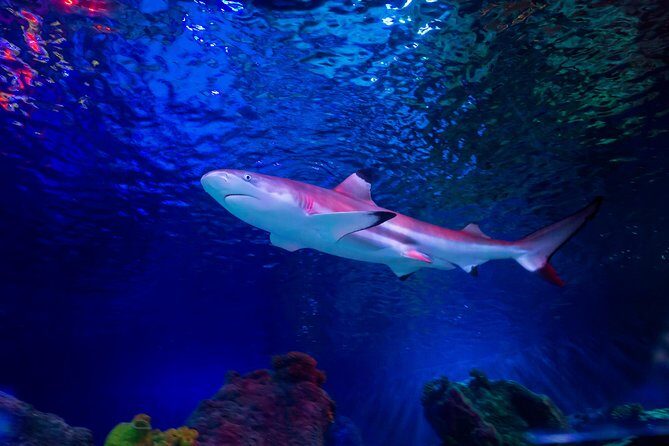
Next up is the Ocean Tank, one of the anchors of the whole visit. The aquarium points to Scotland’s largest collection of shark species, and the exhibit is designed to make sharks feel like real characters in the ecosystem, not just scary fish behind glass.
The key detail you’ll want to notice is the feeding schedule: the sharks in the Ocean Tank are fed every second day at 13:30. If your visit date lines up, you’ll catch the tank at its most energetic. If it doesn’t, don’t worry—you’re not left with nothing. The aquarium notes that if Tropical Sharks aren’t being fed on your day, you can see Deep Loch Tank instead, featuring native sharks and rays.
To get the most out of Ocean Tank, plan to stand in one place and let your eyes adjust. Sharks can feel “hard to see” when you first walk up. Give yourself a minute, read the nearby info, then scan slowly. You’ll usually spot more movement once you know what you’re looking for—especially with species that don’t swim constantly.
Tropical Ocean Tunnel: shipwreck views and hammerhead relatives
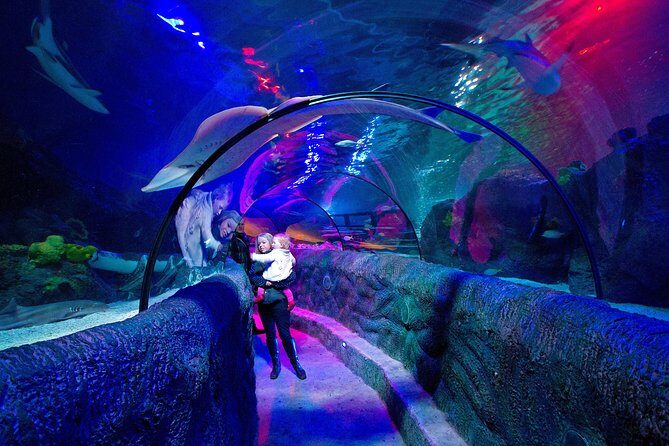
If Ocean Tank is about scale, the Tropical Ocean Tunnel adds theater. This is where you get a sideways, immersive feeling—looking at sharks from different angles as they swim through a tunnel-like viewing area.
One highlight called out in the experience details: you can spot Bonnethead Sharks, which are members of the hammerhead family. The aquarium also mentions that you may see them swimming around an abandoned shipwreck inside the tunnel.
This stop is a great one for kids because it changes the kind of attention they’re using. Instead of just staring forward, they end up doing a “search game” along the tunnel route—eyes up, then down, then back again. Adults often enjoy it too because tunnels create a sense of movement without you walking long distances.
If you’re short on time, prioritize at least one full pass through the tunnel—don’t just stop at the nearest entrance point. The tunnel layout rewards slow scanning.
Rockpools and Bay of Rays: starfish touch time (and Cow Nose Rays)
After the big tanks, the aquarium shifts to interactive zones. This is where the experience turns from watching to doing, and that matters a lot if you’re traveling with children.
You’ll find a “Rocking Rockpools” area where you can stroke starfish. This is explicitly part of the experience, so it’s not a gimmick you just hope exists when you arrive. The touch section tends to be the kind of moment kids remember later because it feels personal.
The Bay of Rays area is also a standout. The details highlight the Cow Nose Rays, described as the only Cow Nose Rays in Scotland. Even if you’re not a ray expert, that kind of specificity is helpful: it tells you this is not the same generic “big fish exhibit” you’d see anywhere.
Practical approach: if multiple kids in your group want to touch the starfish, move with purpose. That area can become a bit of a bottleneck, and you’ll save time by having everyone ready—no wandering around while you’re waiting.






How the center frames protection and habitat help
You’ll notice the aquarium’s tone is mostly educational, even when the exhibit is focused on predators. The Predators of the Reef area connects venom and hunting to a broader idea: these animals matter, and they rely on healthy reef habitats.
The experience also includes messaging about caring for the animals and what visitors can do to help protect them and their habitats. It’s a familiar “aquarium conservation” theme, but it’s delivered in a way that fits the exhibits. Instead of lecturing at you, it builds from animal behavior into a reason-to-care message.
For parents, this is the practical part. It gives you something to point to besides “cool fish.” For kids, it can turn “scary animals” into “important animals,” which makes the whole visit feel more meaningful.
Price and timing: is $19.22 a fair deal for this 1.5–2 hour visit?
At $19.22, you’re paying for a couple of things: the exhibits themselves, plus the fact that the visit is built to last about 1 hour 30 minutes to 2 hours. That time window is right for a family day because it’s long enough to feel complete, but short enough that you can still have energy for lunch, a walk, or a nearby stop afterward.
The value improves if you align your visit with the Ocean Tank shark feeding at 13:30 on the listed schedule cycle. Catching a feeding doesn’t make the rest of the aquarium less interesting, but it does add “live action” to your otherwise glass-and-cardboard viewing.
One more timing note: the experience is commonly booked around 5 days in advance on average. That suggests it can be a popular plan for family outings, so if you’re traveling during a busy period, you’ll likely have an easier day if you secure tickets ahead of time.
Ticket tech and gate reality: mobile ticket tips
The good news first: the ticket is listed as mobile, and confirmation is received at booking. That’s modern and convenient, especially when you’re bouncing between stops and don’t want to manage paper every time.
the Discovering Sydney team covers Wildlife Nature from the Sydney side.
The caution is small but real: one negative experience mentioned needing to print tickets while on holiday, and also that a phone ticket wasn’t acceptable in that case. You don’t have to panic, but I recommend doing one extra step before you go: keep a backup version of your ticket somewhere offline or printed.
It’s the kind of small preparation that prevents a day-stopper.
Who should book this aquarium ticket?
This is best for families with children who like animals and don’t mind moving through an exhibit circuit. The aquarium experience is specifically described as an educational, engaging visit for families, and the hands-on rock pool starfish moment gives kids a reason to pay attention even when they’d rather run.
Adults also enjoy it when they’re curious about how predators fit into a food chain. If you care about animal behavior, you’ll like the way venom and hunting are explained early, then connected to larger reef predators.
If you’re expecting a very long or highly structured guided tour, this may feel too short and self-paced. But if you want a reliable “one afternoon” plan that’s family-friendly and easy to manage, it’s a solid pick.
Should you book SEA LIFE Loch Lomond general admission?
I’d book it if you want a straightforward aquarium visit with genuine hands-on moments and clear animal themes. The standout strengths are the Predators of the Reef storytelling, the chance to touch starfish in the rock pools, and the big-draw shark viewing connected to the Ocean Tank routine.
Skip it only if you’re extremely sensitive to logistics. While the experience is built for easy entry, the one recurring caution is that ticket formats at the gate can be picky. If you plan with a backup ticket copy, that worry drops a lot.
FAQ
How long is the SEA LIFE Loch Lomond general admission visit?
The visit typically lasts about 1 hour 30 minutes to 2 hours.
How much does the ticket cost?
The general admission ticket is listed at $19.22 per person.
Is the ticket mobile, or do I need to print it?
The ticket is offered as a mobile ticket. Some visitors have reported that printing was needed, so it can help to keep a backup version.
What language is the experience offered in?
The experience is offered in English.
What exhibits can I expect to see?
You can expect areas such as Predators of the Reef, the Ocean Tank, and the Tropical Ocean Tunnel. There is also an interactive rock pool section.
Can I touch animals during the visit?
Yes. The interactive rock pool section includes a chance to touch starfish.
Can I cancel for a full refund?
Yes. You can cancel up to 24 hours in advance for a full refund.